
Moving on putts
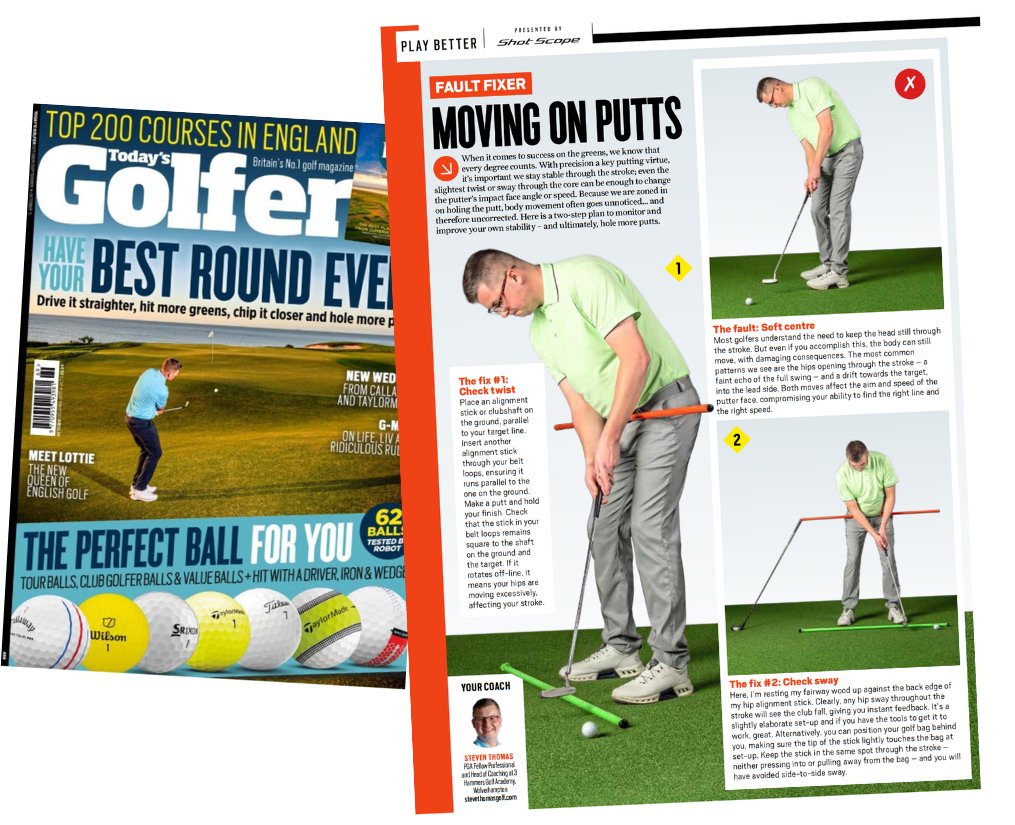
When it comes to success on the greens, we know that every degree counts. With precision a key putting virtue, it’s important we stay stable through the stroke; even the slightest twist or sway through the core can be enough to change the putter’s impact face angle or speed. Because we are zoned in on holing the putt, body movement often goes unnoticed… and therefore uncorrected. Here is a two-step plan to monitor and improve your own stability – and ultimately, hole more putts.
The fix #1: Check twist
Place an alignment stick or clubshaft on the ground, parallel to your target line. Insert another alignment stick through your belt loops, ensuring it runs parallel to the one on the ground. Make a putt and hold your finish. Check that the stick in your belt loops remains square to the shaft on the ground and the target. If it rotates off-line, it means your hips are moving excessively, affecting your stroke.
The fault: Soft centre
Most golfers understand the need to keep the head still through the stroke. But even if you accomplish this, the body can still move, with damaging consequences. The most common patterns we see are the hips opening through the stroke – a faint echo of the full swing – and a drift towards the target, into the lead side. Both moves affect the aim and speed of the putter face, compromising your ability to find the right line and the right speed.
The fix #2: Check sway
Here, I’m resting my fairway wood up against the back edge of my hip alignment stick. Clearly, any hip sway throughout the stroke will see the club fall, giving you instant feedback. It’s a slightly elaborate set-up and if you have the tools to get it to work, great. Alternatively, you can position your golf bag behind you, making sure the tip of the stick lightly touches the bag at set-up. Keep the stick in the same spot through the stroke – neither pressing into or pulling away from the bag – and you will have avoided side-to-side sway.
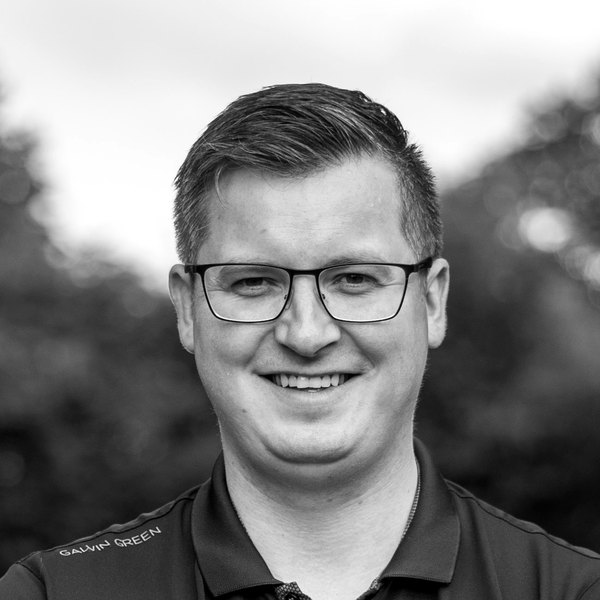
Steve Thomas
Steve is a PGA Fellow Coach, named in Today’s Golfer’s Top 50 UK Golf Coaches every year since 2020, and writes a monthly instruction feature for the magazine. A PGA Professional since 2011, he has coached more than 15,000 golfers and coaches in person in Shropshire and online.