
Hit crisper longer irons
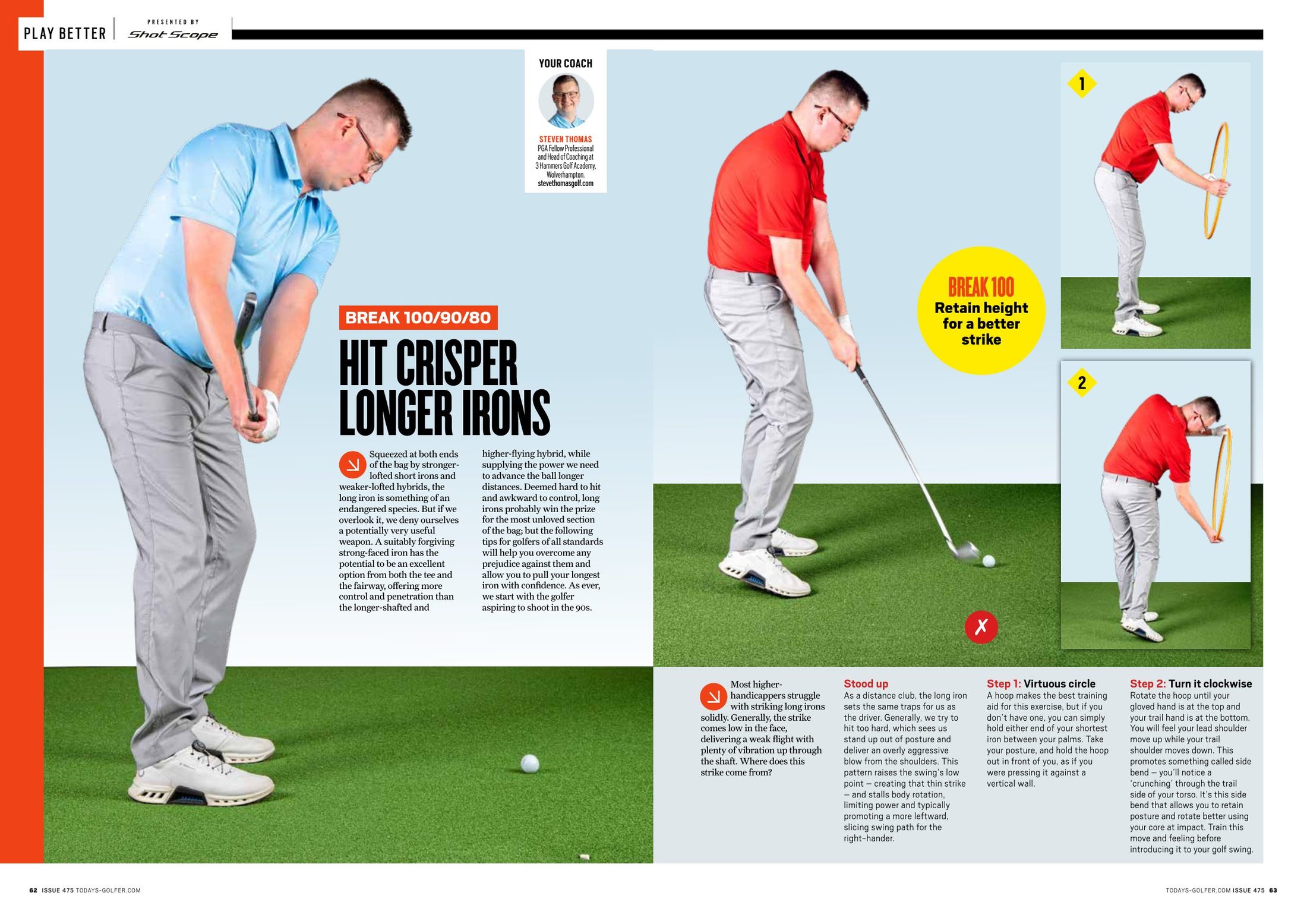
Squeezed at both ends of the bag by stronger-lofted short irons and weaker-lofted hybrids, the long iron is something of an endangered species. But if we overlook it, we deny ourselves a potentially very useful weapon. A suitably forgiving strong-faced iron has the potential to be an excellent option from both the tee and the fairway, offering more control and penetration than the longer-shafted and higher-flying hybrid, while supplying the power we need to advance the ball longer distances. Deemed hard to hit and awkward to control, long irons probably win the prize for the most unloved section of the bag; but the following tips for golfers of all standards will help you overcome any prejudice against them and allow you to pull your longest iron with confidence. As ever, we start with the golfer aspiring to shoot in the 90s.
Retain height for a better strike
Most higher-handicappers struggle with striking long irons solidly. Generally, the strike comes low in the face, delivering a weak flight with plenty of vibration up through the shaft. Where does this strike come from?
Stood up
As a distance club, the long iron sets the same traps for us as the driver. Generally, we try to hit too hard, which sees us stand up out of posture and deliver an overly aggressive blow from the shoulders. This pattern raises the swing’s low point – creating that thin strike – and stalls body rotation, limiting power and typically promoting a more leftward, slicing swing path for the right-hander.
Virtuous circle
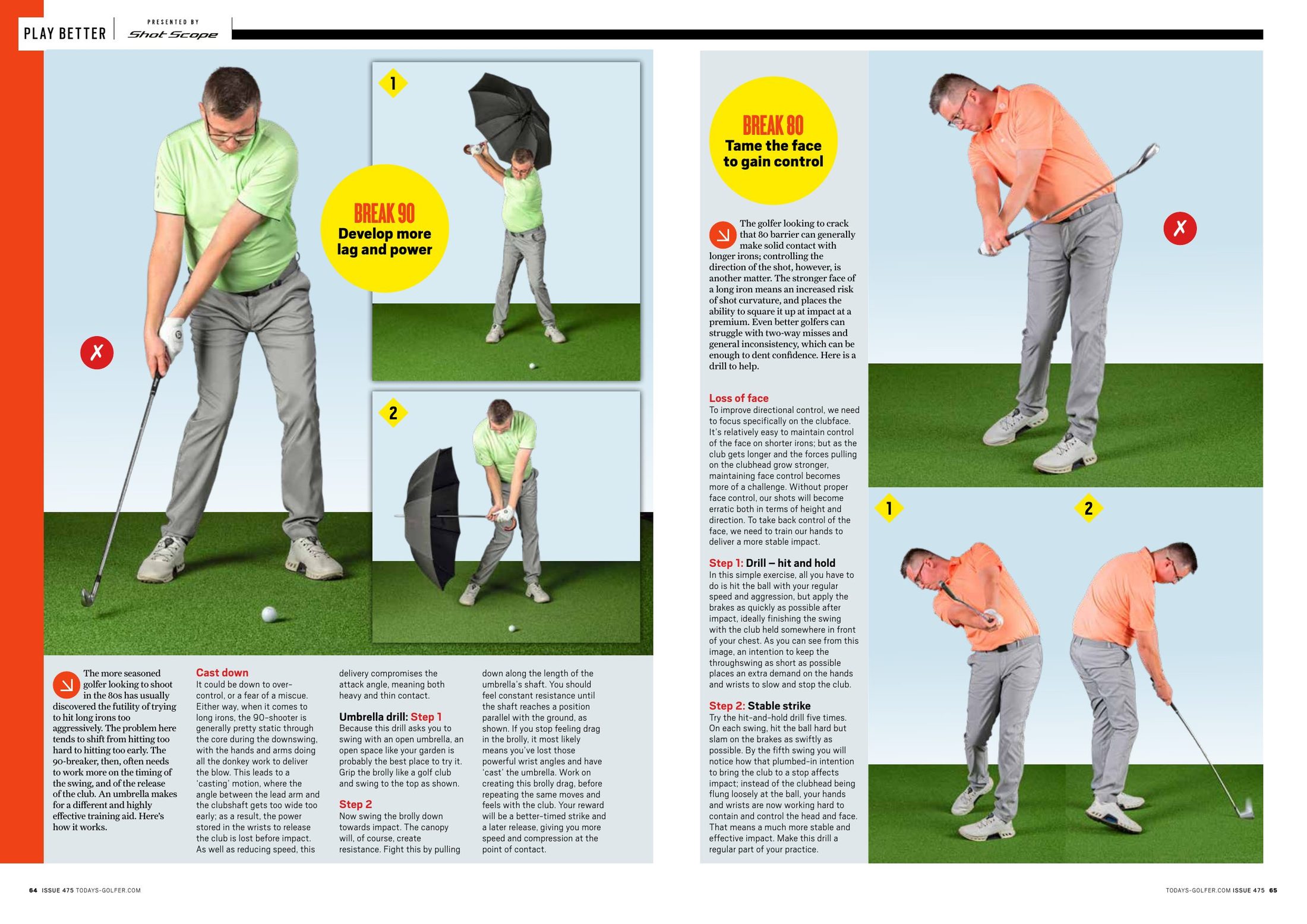
A hoop makes the best training aid for this exercise, but if you don’t have one, you can simply hold either end of your shortest iron between your palms. Take your posture, and hold the hoop out in front of you, as if you were pressing it against a vertical wall.
Turn it clockwise
Rotate the hoop until your gloved hand is at the top and your trail hand is at the bottom. You will feel your lead shoulder move up while your trail shoulder moves down. This promotes something called side bend – you’ll notice a ‘crunching’ through the trail side of your torso. It’s this side bend that allows you to retain posture and rotate better using your core at impact. Train this move and feeling before introducing it to your golf swing.
Develop more lag and power
The more seasoned golfer looking to shoot in the 80s has usually discovered the futility of trying to hit long irons too aggressively. The problem here tends to shift from hitting too hard to hitting too early. The 90-breaker, then, often needs to work more on the timing of the swing, and of the release of the club. An umbrella makes for a different and highly effective training aid. Here’s how it works.
Cast down
It could be down to over-control, or a fear of a miscue. Either way, when it comes to long irons, the 90-shooter is generally pretty static through the core during the downswing, with the hands and arms doing all the donkey work to deliver the blow. This leads to a ‘casting’ motion, where the angle between the lead arm and the clubshaft gets too wide too early; as a result, the power stored in the wrists to release the club is lost before impact. As well as reducing speed, this delivery compromises the attack angle, meaning both heavy and thin contact.
Umbrella drill
Because this drill asks you to swing with an open umbrella, an open space like your garden is probably the best place to try it. Grip the brolly like a golf club and swing to the top as shown.
Now swing the brolly down towards impact. The canopy will, of course, create resistance. Fight this by pulling down along the length of the umbrella’s shaft. You should feel constant resistance until the shaft reaches a position parallel with the ground, as shown. If you stop feeling drag in the brolly, it most likely means you’ve lost those powerful wrist angles and have ‘cast’ the umbrella. Work on creating this brolly drag, before repeating the same moves and feels with the club. Your reward will be a better-timed strike and a later release, giving you more speed and compression at the point of contact.
Tame the face to gain control
The golfer looking to crack that 80 barrier can generally make solid contact with longer irons; controlling the direction of the shot, however, is another matter. The stronger face of a long iron means an increased risk of shot curvature, and places the ability to square it up at impact at a premium. Even better golfers can struggle with two-way misses and general inconsistency, which can be enough to dent confidence. Here is a drill to help.
Loss of face
To improve directional control, we need to focus specifically on the clubface. It’s relatively easy to maintain control of the face on shorter irons; but as the club gets longer and the forces pulling on the clubhead grow stronger, maintaining face control becomes more of a challenge. Without proper face control, our shots will become erratic both in terms of height and direction. To take back control of the face, we need to train our hands to deliver a more stable impact.
Drill – hit and hold
In this simple exercise, all you have to do is hit the ball with your regular speed and aggression, but apply the brakes as quickly as possible after impact, ideally finishing the swing with the club held somewhere in front of your chest. As you can see from this image, an intention to keep the throughswing as short as possible places an extra demand on the hands and wrists to slow and stop the club.
Stable strike
Try the hit-and-hold drill five times. On each swing, hit the ball hard but slam on the brakes as swiftly as possible. By the fifth swing you will notice how that plumbed-in intention to bring the club to a stop affects impact; instead of the clubhead being flung loosely at the ball, your hands and wrists are now working hard to contain and control the head and face. That means a much more stable and effective impact. Make this drill a regular part of your practice.

Steve Thomas
Steve is a PGA Fellow Coach, named in Today’s Golfer’s Top 50 UK Golf Coaches every year since 2020, and writes a monthly instruction feature for the magazine. A PGA Professional since 2011, he has coached more than 15,000 golfers and coaches in person in Shropshire and online.