
Seamless transition
Transition is, of course, a fancy word for the change of direction in the golf swing. It refers to the point at which the backswing ends and the downswing begins. With the club and body slowing down through this point and limited momentum to guide us, transition becomes a notorious weak point. It’s all too easy to begin the downswing poorly and with it taking just a quarter of a second from the top to impact, there is no time to compensate. Issues in transition typically revolve around sequencing and path; and with different skill levels gravitating towards specific errors, we can split the most effective approach into our usual would-be 90, 80 and 70-shooter categories. Use these tips for a smoother transition and a stronger impact.
Path visualiser offers a clear route
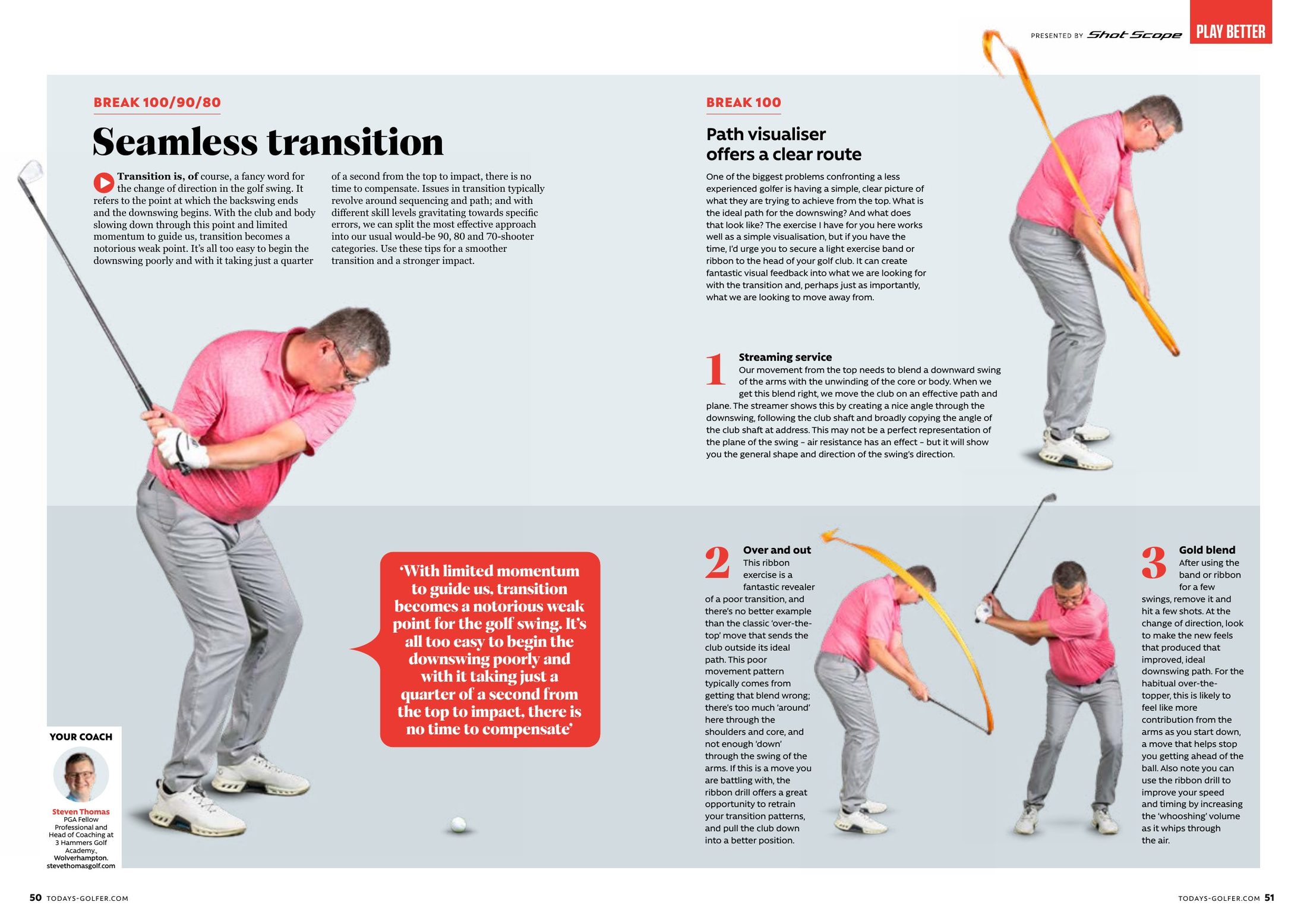
One of the biggest problems confronting a less experienced golfer is having a simple, clear picture of what they are trying to achieve from the top. What is the ideal path for the downswing? And what does that look like? The exercise I have for you here works well as a simple visualisation, but if you have the time, I’d urge you to secure a light exercise band or ribbon to the head of your golf club. It can create fantastic visual feedback into what we are looking for with the transition and, perhaps just as importantly, what we are looking to move away from.
Streaming service
Our movement from the top needs to blend a downward swing of the arms with the unwinding of the core or body. When we get this blend right, we move the club on an effective path and plane. The streamer shows this by creating a nice angle through the downswing, following the club shaft and broadly copying the angle of the club shaft at address. This may not be a perfect representation of the plane of the swing – air resistance has an effect – but it will show you the general shape and direction of the swing’s direction.
Over and out
This ribbon exercise is a fantastic revealer of a poor transition, and there’s no better example than the classic ‘over-the-top’ move that sends the club outside its ideal path. This poor movement pattern typically comes from getting that blend wrong; there’s too much ‘around’ here through the shoulders and core, and not enough ‘down’ through the swing of the arms. If this is a move you are battling with, the ribbon drill offers a great opportunity to retrain your transition patterns, and pull the club down into a better position.
Gold blend
After using the band or ribbon for a few swings, remove it and hit a few shots. At the change of direction, look to make the new feels that produced that improved, ideal downswing path. For the habitual over-the-topper, this is likely to feel like more contribution from the arms as you start down, a move that helps stop you getting ahead of the ball. Also note you can use the ribbon drill to improve your speed and timing by increasing the ‘whooshing’ volume as it whips through the air.
Stop coming over the top
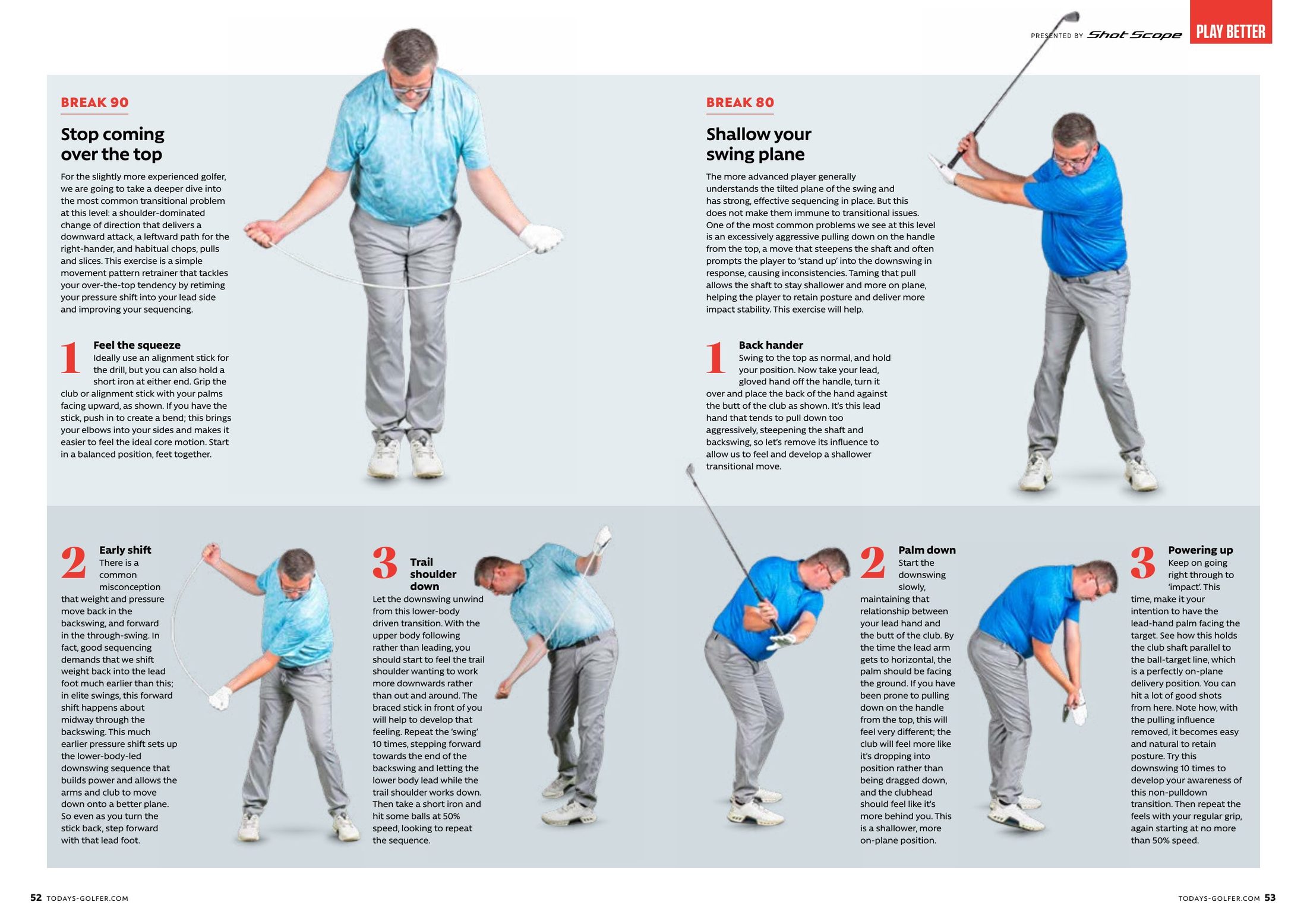
For the slightly more experienced golfer, we are going to take a deeper dive into the most common transitional problem at this level: a shoulder-dominated change of direction that delivers a downward attack, a leftward path for the right-hander, and habitual chops, pulls and slices. This exercise is a simple movement pattern retrainer that tackles your over-the-top tendency by retiming your pressure shift into your lead side and improving your sequencing.
Feel the squeeze
Ideally use an alignment stick for the drill, but you can also hold a short iron at either end. Grip the club or alignment stick with your palms facing upward, as shown. If you have the stick, push in to create a bend; this brings your elbows into your sides and makes it easier to feel the ideal core motion. Start in a balanced position, feet together.
Early shift
There is a common misconception that weight and pressure move back in the backswing, and forward in the through-swing. In fact, good sequencing demands that we shift weight back into the lead foot much earlier than this; in elite swings, this forward shift happens about midway through the backswing. This much earlier pressure shift sets up the lower-body-led downswing sequence that builds power and allows the arms and club to move down onto a better plane. So even as you turn the stick back, step forward with that lead foot.
Trail shoulder down
Let the downswing unwind from this lower-body driven transition. With the upper body following rather than leading, you should start to feel the trail shoulder wanting to work more downwards rather than out and around. The braced stick in front of you will help to develop that feeling. Repeat the ‘swing’ 10 times, stepping forward towards the end of the backswing and letting the lower body lead while the trail shoulder works down. Then take a short iron and hit some balls at 50% speed, looking to repeat the sequence.
Shallow your swing plane
The more advanced player generally understands the tilted plane of the swing and has strong, effective sequencing in place. But this does not make them immune to transitional issues. One of the most common problems we see at this level is an excessively aggressive pulling down on the handle from the top, a move that steepens the shaft and often prompts the player to ‘stand up’ into the downswing in response, causing inconsistencies. Taming that pull allows the shaft to stay shallower and more on plane, helping the player to retain posture and deliver more impact stability. This exercise will help.
Back hander
Swing to the top as normal, and hold your position. Now take your lead, gloved hand off the handle, turn it over and place the back of the hand against the butt of the club as shown. It’s this lead hand that tends to pull down too aggressively, steepening the shaft and backswing, so let’s remove its influence to allow us to feel and develop a shallower transitional move.
Palm down
Start the downswing slowly, maintaining that relationship between your lead hand and the butt of the club. By the time the lead arm gets to horizontal, the palm should be facing the ground. If you have been prone to pulling down on the handle from the top, this will feel very different; the club will feel more like it’s dropping into position rather than being dragged down, and the clubhead should feel like it’s more behind you. This is a shallower, more on-plane position.
Powering up
Keep on going right through to ‘impact’. This time, make it your intention to have the lead-hand palm facing the target. See how this holds the club shaft parallel to the ball-target line, which is a perfectly on-plane delivery position. You can hit a lot of good shots from here. Note how, with the pulling influence removed, it becomes easy and natural to retain posture. Try this downswing 10 times to develop your awareness of this non-pulldown transition. Then repeat the feels with your regular grip, again starting at no more than 50% speed.

Steve Thomas
Steve is a PGA Fellow Coach, named in Today’s Golfer’s Top 50 UK Golf Coaches every year since 2020, and writes a monthly instruction feature for the magazine. A PGA Professional since 2011, he has coached more than 15,000 golfers and coaches in person in Shropshire and online.